





To secure a seat in a premier Master’s program or becoming a life sciences professional often begins with cracking the CUET PG Life-Sciences Exam 2026. As Central Universities and other premier institutions increasingly adopt the Common University Entrance Test (CUET) for postgraduate admissions, competition has reached an all-time high. To secure a seat in top-tier programs like MSc Life Sciences, Molecular Biology, or Genetics, you need more than just hard work; you need an SEO-optimized preparation roadmap that covers every unit, book, and strategy in detail.
The Common University Entrance Test (Postgraduate), or CUET PG, is a national-level entrance examination conducted by the National Testing Agency (NTA). For Life Sciences (Paper Code: SCQP17), the 2026 exam is a critical gateway to prestigious universities such as Delhi University (DU), Banaras Hindu University (BHU), and Jawaharlal Nehru University (JNU).
This comprehensive guide breaks down the CUET PG Life-Sciences Exam 2026 and provides an SEO-optimized roadmap, covering chapter-wise weightage, expert-recommended books, and an effective preparation strategy to help you navigate the syllabus, understand chapter-wise weightage, and implement a topper-approved study plan.
Following recent updates, the exam now focuses exclusively on 75 domain-specific questions, requiring a specialized and deep understanding of biological sciences.
CUET PG Life-Sciences Exam 2026: Key Exam Highlights
Understanding the structural foundation of the CUET PG Life-Sciences exam 2026 is the first step toward a high score.
CUET PG Life-Sciences Exam 2026: Overview
The National Testing Agency (NTA) conducts this computer-based test (CBT) annually. For the 2026 cycle, the exam is tentatively scheduled for March 2026, with registration typically opening in December 2025.
| Feature | Details |
| Exam Name | CUET PG (Life Sciences) |
| Conducting Body | National Testing Agency (NTA) |
| Paper Code | SCQP17 |
| Mode of Exam | Online (Computer-Based Test – CBT) |
| Total Questions | 75 Multiple Choice Questions (MCQs) |
| Total Marks | 300 Marks |
| Duration | 90 Minutes |
| Marking Scheme | +4 for correct, -1 for incorrect |
| Medium | English and Hindi |
Chapter-Wise Weightage Analysis of the CUET PG Life-Sciences Exam 2026
While the NTA does not release an official weightage per chapter for the CUET PG Life-Sciences Exam 2026 , historical trends for the M.Sc. Life Sciences domain provides a clear picture of high-yield topics.
Core Domains and Estimated Weightage:
- Zoology, Sericulture & Human Genetics (25–30%): This is the most significant section, covering Cell Biology, Biochemistry, Molecular Biology, Ecology, Evolution, Biodiversity, and Immunology.
- Plant Biotechnology (10–15%): Focuses on the intersection of plant sciences and biotechnological applications.
- Techniques & Chromatin (High Importance): Essential topics include chromatography, spectroscopy, microscopy, and the organization of chromosomes.
- Microbiology & Immunology: Significant weightage is given to microbial diversity, bacterial reproduction, and the human immune system.
Chapter-Wise Weightage: Where to Focus?
Success in the CUET PG Life-Sciences Exam 2026 depends on identifying high-yield topics. While the NTA provides a broad syllabus, historical trends reveal which units carry the most weight.
High-Priority Units (60-70% of the Paper)
- Cell Biology (22–25%): Focus on cell cycle regulation, organelle functions, and membrane signaling.
- Molecular Biology & Genetics (22–25%): Key areas include DNA replication, transcription, translation, and Mendelian inheritance.
- Biochemistry (12–14%): Prioritize enzyme kinetics, metabolic pathways (Glycolysis, TCA, ETS), and protein structure.
Moderate to Low Priority Units (30-40% of the Paper)
- Techniques (Unit 1): Principles of PCR, Chromatography, and Spectroscopy are essential for scoring in “application” based questions.
- Animal & Plant Sciences: Human physiology, endocrinology, and plant metabolism (photosynthesis/photoperiodism) are frequently tested.
- Microbiology & Immunology: Cover microbial diversity, vaccines, and the complement system.
- Ecology & Evolution (8–10%): Focus on population genetics and biogeochemical cycles.
Detailed Syllabus for Life Sciences (SCQP17)
The syllabus for the CUET PG Life-Sciences Exam 2026 is broad, encompassing both theoretical concepts and applied understanding. It is further divided into eight primary units:
- Techniques: Chromatography, Spectroscopy, Microscopy, Electrophoresis, and PCR.
- Chromatin Structure: Chromosome organization in prokaryotes and eukaryotes.
- Biochemistry: Bioenergetics, membrane transport, and biomolecule functions. Focus on the structure/function of proteins, DNA, lipids, and metabolic pathways like Glycolysis and the TCA cycle.
- Biotechnology: Recombinant DNA technology and its applications in medicine and agriculture. Principles of gene cloning, recombinant DNA technology, and animal/plant cell culture.
- Microbiology: Bacterial reproduction, antimicrobial agents, and virology. Detailed study of replication, transcription, translation, and DNA repair mechanisms.
- Molecular Genetics: Linkage, crossing over, DNA repair, and population genetics. Principles of inheritance, linkage, crossing over, and chromosomal aberrations.
- Plant Sciences: Bryophytes to Angiosperms, vernalization, and economic importance. Study of Bryophytes, Pteridophytes, Gymnosperms, and Angiosperms, alongside photosynthesis and biogeochemical cycles.
- Animal Sciences: Invertebrate/Vertebrate characteristics, apoptosis, and cancer biology. Invertebrate/vertebrate characteristics, human anatomy, endocrinology, and diseases like cancer.
Best Books for CUET PG Life-Sciences 2026
Using the right study materials is vital for targeted preparation To cover the vast syllabus of the CUET PG Life-Sciences Exam 2026, you need a curated list of standard textbooks.
- Biochemistry: Lehninger Principles of Biochemistry by Nelson and Cox.
- Cell Biology: Molecular Biology of the Cell by Bruce Alberts.
- Genetics: Principles of Genetics by Gardner or Simmons.
- Molecular Biology: Molecular Biology of the Gene by Watson.
- Microbiology: Microbiology: An Introduction by Tortora, Funke, and Case.
- General Biology: Campbell Biology by Jane B. Reece.
- Comprehensive Guide: Life Sciences Fundamentals and Practice by Pranav Kumar (Pathfinder Academy).
| Subject | Recommended Book / Publisher | Ideal For |
| Combined Life Sciences | CUET PG Life Sciences Combo Set (Excellence Brings Success) | In-depth practice with detailed solutions. |
| Biochemistry | CUET PG Biochemistry & Life Sciences Set (Bestseller Publications) | Thorough preparation with ample practice. |
| General Awareness | CUET PG General Knowledge (Arihant Publications) | Building a strong GK base. |
Effective Preparation Strategy: A Step-by-Step Guide
A structured and devoted preparation strategy is mandatory due to high competition.
Step 1: Master the Exam Pattern
Familiarize yourself with the 90-minute, 75-question format to optimize performance.
Step 2: Strategic Syllabus Breakdown
Divide the syllabus into smaller, manageable topics to avoid feeling overwhelmed. Prioritize high-weightage topics like Zoology and Molecular Biology.
Step 3: Solve Previous Year Question Papers (PYQs)
Solving PYQs is one of the most effective strategies.
- Aim to solve one set per day.
- Review solutions thoroughly to identify conceptual gaps.
- Note down recurring topics and trends.
Step 4: Intensive Mock Testing
Mock tests are vital for evaluating readiness.
- Start with one full-length mock test weekly.
- Increase frequency to 2–3 mocks per week in the final month.
- Maintain a performance journal to track mistakes and time taken.
Step 5: Time Management & Final Revision
- During Study: Allocate the final month exclusively for revision and mock tests.
- During Exam: You have exactly 1.2 minutes per question. Prioritize easier questions and avoid excessive time on difficult ones.
- Revision: Focus on weak areas identified in mocks and do a final revision of key formulas and theorems.
Effective Preparation Strategy: A 4-Step Roadmap
A high score in the CUET PG Life-Sciences Exam 2026 requires a structured approach.
Step 1: The Foundation Phase (Months 1-3)
Focus on conceptual clarity. Use NCERT books and the recommended textbooks listed above to strengthen your basics for the CUET PG Life-Sciences Exam 2026 . Create “Concept Maps” for complex pathways like the Citric Acid Cycle or Signal Transduction.
Step 2: The Practice Phase (Months 4-5)
Start solving Previous Year Question Papers (PYQs). This is the best way to understand the difficulty level and recurring trends of the CUET PG Life-Sciences Exam 2026. Use the Elimination Technique for narrowing down to two options before attempting a question to minimize negative marking.
Step 3: The Mock Test Phase (Final 2 Months)
Give at least 20–25 full-length mock tests before the actual CUET PG Life-Sciences Exam 2026.
- Months 4-5: 1 mock test per week.
- Last Month: 2–3 mocks per week to improve speed and accuracy.
- Final 15 Days: Daily mocks to simulate exam-day pressure.
Step 4: The Revision Phase (Daily)
Allocate 30 minutes every day from around 1 month before the CUET PG Life-Sciences Exam 2026 to revisit high-weightage formulas and diagrams. Use Spaced Repetition—revisiting a topic after 1, 3, and 7 days to ensure long-term retention.
Career Scope After M.Sc Life Sciences
Clearing the CUET PG Life-Sciences Exam 2026 opens doors to various lucrative career paths:
- Research Scientist: Work in R&D for biotech and pharma companies (Salary: ₹6-12 LPA for experienced roles).
- Clinical Research Associate (CRA): Manage clinical trials and regulatory compliance (Salary: Up to ₹20 LPA for senior roles).
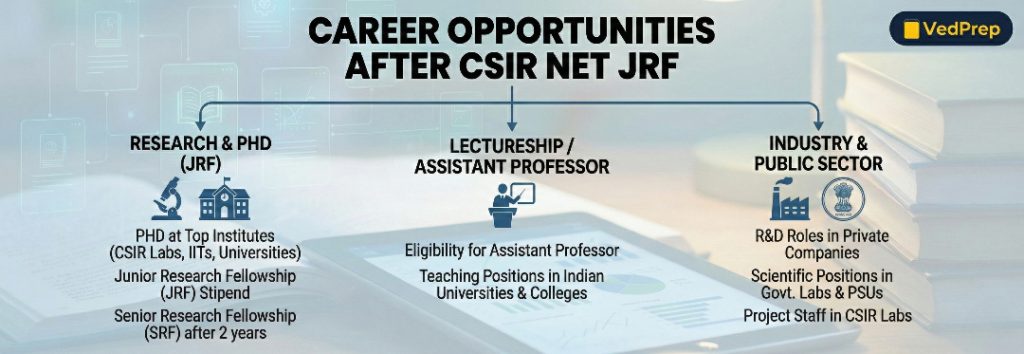
- Academia: Pursue a PhD and become an Assistant Professor in central universities.
- Government Sector: Roles as Public Health Officers or Policy Analysts.
Conclusion
Success in the CUET PG Life-Sciences Exam 2026 requires a blend of rigorous conceptual study and strategic time management. By prioritizing high-weightage chapters like Zoology, Sericulture, and Genetics, and practicing with PYQs and mock tests. The CUET PG Life-Sciences Exam 2026 is a gateway to the country’s most prestigious postgraduate programs. Success requires a balance of deep conceptual understanding and rigorous practice.
By focusing on high-weightage chapters like Cell and Molecular Biology, utilizing standard reference books, and consistently taking mock tests, you can build the accuracy needed to overcome the -1 negative marking penalty and you can significantly increase your chances of securing a top rank.
Start your preparation early, stay disciplined, and keep your goal of entering your dream university in sight. Ensure you follow a structured 90-minute strategy during the actual CBT in the CUET PG Life-Sciences Exam 2026 to maximize your attempts. Stay focused, use recommended resources like the Life Sciences Combo Set, and keep track and follow the official NTA Website for updates to secure your spot in a top postgraduate program.
Also for further more updates, and learning matter or the recorded sessions to help you out in preparation of the CUET PG Life-Sciences Exam 2026 click here
Frequently Asked Questions (FAQs)
How many mock tests should I attempt?
Aim for at least 20–25 full-length mock tests to master time management.
Are final-year Bachelor’s students eligible?
Yes, candidates appearing in their final year of graduation in 2026 are eligible to apply.
Which unit has the highest weightage?
Cell Biology and Molecular Biology/Genetics each carry approximately 22-25% weightage.
What is the total duration of the CUET PG Life Science exam?
The exam duration is 90 minutes (1 hour and 30 minutes).
When will the CUET PG 2026 exam take place?
The exam is tentatively scheduled for March to April 2026.
Is CUET PG syllabus same across universities?
Yes, CUET PG syllabus is same across universities in India. CUET PG exam will be conducted based on the syllabus released on the official website of NTA CUET PG 2026. There will be no separate syllabus for CUET PG released by any participating universities.
Is coaching necessary for cracking CUET PG 2026?
Coaching can be helpful for structured learning, expert guidance, and doubt resolution, but self-study with discipline and good resources can also lead to success.
Should I refer to CUET PG previous year question papers?
Absolutely! Practicing previous year papers helps you understand the question pattern, difficulty level, and important topics.
What is the best time to start preparing for CUET PG 2026?
It’s ideal to begin preparation at least 8–10 months before the exam. This gives you enough time to cover the syllabus, revise thoroughly, and take multiple mock tests.
Are mock tests important for CUET PG 2026 preparation?
Yes, mock tests are crucial as they simulate the actual exam environment, help identify weak areas, and improve time management skills.