

The CSIR NET Chemical Science Syllabus has been officially released by the National Testing Agency (NTA) in collaboration with CSIR. The notification for the CSIR NET December 2026 exam was published on September 25, 2026, and the online application window is open from September 25 to October 25, 2026 (till 11:50 PM).
The exam is scheduled to be held on 18 December 2026 in computer-based test (CBT) mode.
Candidates preparing for Chemical Sciences can now access the latest CSIR NET Chemical Science syllabus PDF on the official website: csirnet.nta.ac.in.
The syllabus is neatly divided into three major sections:
- Part A – Common for all subjects; covers General Science, Quantitative Reasoning & Analysis, and Research Aptitude.
- Part B – Subject-specific questions focused on fundamental concepts of Chemical Sciences.
- Part C – Higher-level analytical questions that test the candidate’s ability to apply scientific ideas and problem-solving skills.
The Chemical Science syllabus includes detailed topics from Inorganic Chemistry, Organic Chemistry, Physical Chemistry, along with several interdisciplinary areas relevant to modern research.
A clear understanding of the updated CSIR NET Chemical Science Syllabus 2026 is crucial for candidates aiming for JRF (Junior Research Fellowship) or Lectureship (LS).
CSIR NET Chemical Science Syllabus About
CSIR NET Chemical Science syllabus covers all the important areas of chemistry that a postgraduate student should know. It includes Organic, Inorganic, and Physical Chemistry, along with some interdisciplinary topics like spectroscopy, polymer chemistry, catalysis, and environmental chemistry. The syllabus is designed to test not just memory but also conceptual understanding, problem-solving ability, and analytical thinking. Overall, the syllabus prepares students to master fundamental principles of chemistry and apply them to real scientific problems, making it ideal for those aiming for research (JRF) or teaching careers in chemical sciences.
The CSIR NET Chemical Sciences exam follows a single-paper format divided into three parts – Part A, Part B, and Part C, each designed to test different levels of scientific understanding and analytical ability. Important Topics for Physical Science
How to Download CSIR NET Syllabus PDF
To download the CSIR NET Syllabus PDF for 2025:
- Visit the official National Testing Agency (NTA) CSIR NET website: csirnet.nta.ac.in.
- Look for the “Syllabus” or “Information Bulletin” section on the homepage.
- Download the syllabus PDF for your chosen subject (Life Sciences, Physical Sciences, Chemical Sciences, Earth Sciences, or Mathematical Sciences) from the provided links.
- The downloaded PDF will contain the detailed, topic-wise syllabus for Part A (General Aptitude) and Parts B/C (subject-specific).
CSIR NET Chemical Science Exam
overview of the CSIR NET Chemical Science exam for your reference:
| Particulars | Details |
| Name of the Exam | CSIR NET December 2025 |
| Conducting Authority | National Testing Agency (NTA) |
| Frequency of Exam | Twice a Year |
| CSIR NET 2025 Exam Date | 18th December 2025 |
| Exam Level | National Level |
| Purpose of Exam | Eligibility for Lectureship & Junior Research Fellowship (JRF) |
| Exam Duration | 180 Minutes |
| Exam Mode | Online (CBT) |
| Examination Frequency | Conducted in June & December |
| Eligibility Criteria | Post-Graduation in Science with at least 50% marks |
| Official Website | csir.nta.nic.in |
CSIR NET Chemical Science Syllabus PDF
The CSIR NET Chemical Science Syllabus PDF is now available for all aspirants preparing for the upcoming exam. This PDF includes all the essential topics that candidates need to study in order to score well in the Chemical Sciences paper.
Having a complete and updated syllabus in one place makes it easier to plan your preparation, organize topics, and focus on the sections that carry the most weight in the exam. Important Topics for Physical Science
Candidates can download the CSIR NET Chemical Science syllabus PDF directly from the link provided below and begin their preparation with the latest official guidelines.
| CSIR NET Syllabus Chemical Sciences | Download PDF |
CSIR NET Chemical Science Syllabus Unit-Wise
The CSIR NET Chemical Science Syllabus Unit Wise is structured to help candidates prepare systematically for the exam. It includes detailed topics from Physical Chemistry, Organic Chemistry, and Inorganic Chemistry, ensuring that aspirants build a strong conceptual foundation for all three sections of the Chemical Sciences paper.
Below is the complete unit-wise CSIR NET Chemical Science syllabus covering all major chapters and sub-topics.
CSIR NET Syllabus Physical Chemistry
Here is the updated Physical Chemistry syllabus for CSIR NET 2025, organized chapter-wise for easier preparation:
| Chapter No. | Chapter Name | Topics Covered |
| 1 | Chemical Periodicity | • Homonuclear & heteronuclear molecules: structure & bonding
• Shapes of molecules (VSEPR theory) • Concepts of acids and bases • HSAB theory • Non-aqueous solvents |
| 2 | Main Group Elements & Their Compounds | • Allotropy
• Synthesis • Structure & bonding • Industrial importance of compounds |
| 3 | Transition Elements & Coordination Compounds | • Structure
• Bonding theories • Spectral & magnetic properties • Reaction mechanisms |
| 4 | Inner Transition Elements | • Spectral & magnetic properties
• Redox chemistry • Analytical applications |
| 5 | Organometallic Compounds | • Synthesis
• Bonding & structure • Reactivity • Organometallics in homogeneous catalysis • Cages & metal clusters |
| 6 | Analytical Chemistry | • Separation techniques
• Spectroscopic methods • Electroanalytical & thermoanalytical methods |
| 7 | Bioinorganic Chemistry | • Photosystems
• Porphyrins • Metalloenzymes • Oxygen transport • Electron-transfer reactions • Nitrogen fixation • Metal complexes in medicine |
| 8 | Characterization of Inorganic Compounds | • IR, Raman, NMR, EPR, Mössbauer
• UV-Vis, NQR • Mass spectrometry • Electron spectroscopy • Microscopic techniques |
| 9 | Nuclear Chemistry | • Nuclear reactions
• Fission & fusion • Radioanalytical techniques • Activation analysis |
CSIR NET Dec 2025 Application Form | Step-by-Step Guide & 5 Mistakes to Avoid
| Related Articles | |
| CSIR NET Previous Year Question Papers | CSIR NET Cut Off |
| CSIR NET Eligibility Criteria | CSIR NET Chemistry Preparation |
| CSIR NET Time Table | CSIR NET Books |
CSIR NET Syllabus Organic Chemistry
Below is the Organic Chemistry syllabus for CSIR NET Chemical Sciences chapter-wise:
| Chapter No. | Chapter Name | Topics Covered |
| 1 | Common Named Reactions & Rearrangements | • Applications in organic synthesis |
| 2 | Principles of Stereochemistry | • Configurational & conformational isomerism
• Asymmetric induction • Diastereoselectivity • Stereogenicity & stereoselectivity • Enantioselectivity |
| 3 | Concepts in Organic Synthesis | • Disconnection approach
• Synthons • Protecting groups • Linear & convergent synthesis |
| 4 | Asymmetric Synthesis | • Optical & kinetic resolution
• Determination of enantiomeric & diastereomeric excess • Chiral auxiliaries • Substrate-, reagent-, and catalyst-controlled reactions |
| 5 | Determination of Organic Compounds | • IR & UV spectroscopy
• Mass spectrometry |
| 6 | Pericyclic Reactions | • Cycloaddition reactions
• Sigmatropic rearrangements • Electrocyclic reactions • Other concerted processes |
| 7 | Organic Photochemistry | • Principles
• Applications in synthetic organic chemistry |
CSIR NET Syllabus Inorganic Chemistry
CSIR NET Syllabus Inorganic Chemistry Chapters & Topics Here is the Inorganic Chemistry syllabus for CSIR NET chapter-wise:
| Chapter No. | Chapter Name | Topics Covered |
| 1 | Organometallic Compounds | • Bonding & structure
• Reactivity • Synthesis • Organometallics in homogeneous catalysis |
| 2 | Nuclear Chemistry | • Radioanalytical techniques
• Activation analysis • Nuclear reactions: fission & fusion |
| 3 | Bioinorganic Chemistry | • Porphyrins
• Photosystems • Oxygen transport • Nitrogen fixation • Metal complexes in medicine |
| 4 | Concepts of Acids & Bases | • HSAB concept
• Non-aqueous solvents |
| 5 | Chemical Periodicity | • Periodic table
• Trends in elements & groups |
| 6 | Inner Transition Elements | • Redox chemistry
• Spectral & magnetic properties • Analytical applications |
CSIR NET Syllabus Interdisciplinary Chemistry
The Interdisciplinary Chemistry syllabus for CSIR NET 2026 covers modern, application-based topics that connect chemistry with fields like biology, environment, materials science, and technology. These topics help candidates understand the cross-functional role of chemistry in real-world scientific research.
CSIR NET Interdisciplinary Chemistry
| Chapters | Topics Covered |
| Medicinal Chemistry | Drug design, mechanism of drug action, therapeutic agents, structure–activity relationships (SAR) |
| Supramolecular Chemistry | Host–guest interactions, molecular recognition, self-assembly, non-covalent interactions |
| Environmental Chemistry | Pollution chemistry, atmospheric chemistry, water & soil contaminants, environmental monitoring |
| Chemistry in Nanoscience & Technology | Nanomaterials, synthesis and characterization of nanoparticles, applications in catalysis, medicine & electronics |
| Catalysis and Green Chemistry | Homogeneous & heterogeneous catalysis, green synthetic methods, atom-economy, eco-friendly chemical processes |
CSIR NET Chemical Science Syllabus Topic Weightage
To prepare effectively for the CSIR NET Chemical Science 2026 exam, candidates must understand the section-wise weightage of questions and marks. This helps in prioritizing topics and planning a balanced study strategy.
CSIR NET Chemical Science Weightage of Topics
The table below provides a clear breakdown of total questions, marks, and negative marking for each part of the exam.
| Sections | Total Questions | Marks Allotted | Negative Marking | Marks per Question | Total Time | Total Marks |
| Part A | 20 | 30 | 0.5 | 2 | 3 Hours | 200 |
| Part B | 40 | 70 | 0.5 | 2 | — | — |
| Part C | 60 | 100 | 1 | 4 | — | — |
CSIR NET Exam Chemical Science Books
The CSIR NET Chemical Science books listed below include the most popular and highly recommended resources for all three branches Inorganic, Organic, and Physical Chemistry. These books are aligned with the latest NTA-CSIR NET syllabus for 2026.
| Book Title | Author / Publication | Key Features |
| Inorganic Chemistry | D.F. Shriver, P.W. Atkins & C.H. Langford | A complete guide to inorganic chemistry concepts, covering bonding, coordination compounds, and structure systematically. Excellent for conceptual clarity and NET-level questions. |
| Fundamentals of Molecular Spectroscopy | C.N. Banwell | Explains spectroscopy principles clearly with problem sets and model papers. Ideal for mastering molecular structure and optical methods. |
| Principles of Physical Chemistry | Peter Atkins | Concise explanations of core physical chemistry principles. Includes numerous solved examples for thermodynamics, kinetics, and quantum topics. |
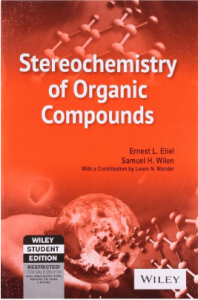
| Stereochemistry of Organic Compounds | Ernest L. Eliel | An in-depth and problem-focused text on stereochemistry, covering conformations, chirality, and stereochemical principles. |
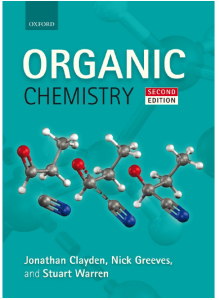
| Organic Chemistry | Jonathan Clayden, Nick Greeves & Stuart Warren | Comprehensive yet accessible presentation of reaction mechanisms and organic synthesis. Designed for deep conceptual understanding. |
|
CSIR NET Previous Year Questions Link |
|
| CSIR NET Life Sciences | Click Here |
| CSIR NET Physical Sciences | Click Here |
| CSIR NET Earth Sciences | Click Here |
| CSIR NET Chemical Sciences | Click Here |
| CSIR NET Mathematical Sciences | Click Here |
CSIR NET Chemical Science Syllabus FAQs

How many sections are included in the Chemical Science question paper?
The CSIR NET Chemical Sciences exam has three parts: Part A tests general aptitude, Part B covers subject-related questions on core chemical concepts, and Part C assesses higher-level analytical and application-based problem-solving skills.
Is the Chemical Sciences paper considered tough compared to other subjects?
The exam is of moderate to high difficulty, mainly due to concept-heavy topics, numerical calculations, and research-oriented questions in Part C. With a strategic study plan and regular practice, it becomes manageable.
Can a student with only a B.Sc. degree appear for the CSIR NET exam?
B.Sc. degree alone is not sufficient for CSIR NET (except for Integrated BS-MS).
However, B.Sc. students can appear for GATE or apply for Integrated PhD programs instead.
What is the typical monthly salary of a candidate who qualifies CSIR NET and becomes an Assistant Professor?
A CSIR NET-qualified Assistant Professor in India typically earns ₹55,000 – ₹1,00,000 per month, depending on the institution and city. JRF and SRF fellowships offer: JRF: ₹37,000 + HRA, SRF: ₹42,000 + HRA



